Coalbed Methane (CBM) drilling has emerged as a crucial sector within the unconventional gas industry. Unlike conventional oil and gas reservoirs, CBM deposits store methane directly attached to the internal pore structure of underground coal seams. To extract this trapped gas, operators must first pump out significant quantities of groundwater to reduce reservoir pressure—a process that enables the methane to unbind and flow up the wellbore.
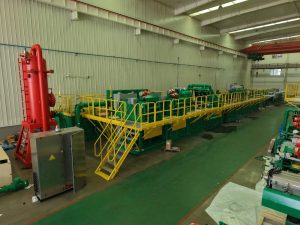
While highly effective, CBM extraction presents unique operational challenges. The soft, brittle nature of coal seams leads to substantial amounts of fine coal particles, abrasive silts, and reactive clays infiltrating the drilling fluid. If left untreated, these solids degrade mud properties, accelerate equipment wear, and severely impair drilling efficiency.
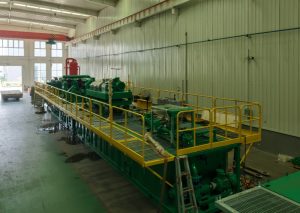
To address these harsh downhole conditions, GN Solids Control has developed a comprehensive 5-Stage CBM Solids Control System, engineered to optimize fluid recovery and ensure seamless solids separation during demanding drilling campaigns.
Understanding the 5-Stage Solids Control Process
A robust solids control system processes drilling fluids in sequential stages, targeting progressively smaller particle sizes to restore the mud to its ideal properties:
Gas-Liquid Separation: Return fluids from CBM wells often carry entrained gas. Passing through a high-efficiency gas-liquid separator isolates free methane at the surface safely before liquid treatment begins.
Primary Coarse Separation: The drilling fluid is directed onto a high-performance shale shaker. High-G linear motion shakers quickly discard large coal cuttings and coarse solids from the stream.
Vacuum Degassing: Entrained micro-gas bubbles reduce mud density and can cause pump cavitation. A dedicated vacuum degasser removes trapped gas, restoring fluid weight and stability.
Hydrocyclone Desand & Desilt: Hydrocyclone manifolds process the fluid to remove medium-to-fine sand particles and silts that pass through the initial shaker screens.
Ultrafine Particle Removal: In the fifth stage, a high-speed decanting centrifuge removes ultrafine particles down to 2 to 5 microns. This enables maximum fluid recovery and ensures clean mud is recirculated back into the active system.
Driving Efficiency in Unconventional Drilling
By implementing a complete 5-stage processing setup from GN Solids Control, drilling contractors significantly lower their overall operational costs, reduce environmental waste footprint, and prolong the lifespan of expensive downhole equipment. Customized engineering solutions like these continue to push the boundaries of operational excellence in the modern energy sector.