Advanced Solids Control and Drilling Waste Management Solutions for Africa
The demand for reliable solids control and drilling waste management equipment continues to grow across Africa’s oil and gas industry. From drilling operations in established petroleum-producing regions to new exploration and development projects, operators need efficient equipment to manage drilling fluids, separate fine solids, recover valuable liquid phases, and reduce the volume of waste requiring disposal.
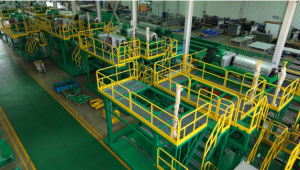
For an Africa project, GN Solids Control is supplying a planned configuration of 10 sets of big bowl mud centrifuges and 5 vertical cuttings dryers. This equipment combination addresses two important aspects of drilling operations: fine solids separation from drilling fluids and the treatment of drill cuttings generated during drilling.
Big Bowl Mud Centrifuges for High-Volume Solids Separation
A decanter centrifuge is an important component of a modern drilling fluid solids control system. It uses centrifugal force to separate suspended solids from liquid according to differences in density and particle characteristics.
Compared with conventional screening equipment, a decanter centrifuge can process fine particles that are difficult to remove through shale shakers alone. Depending on the drilling fluid formulation and operating conditions, centrifuges can support low-gravity solids removal, drilling fluid maintenance, barite recovery, and drilling waste treatment.
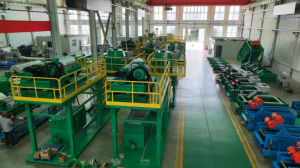
GN offers several centrifuge configurations for different flow rates and separation requirements. Its GNLW453D-VFD model, for example, features a 4530 mm bowl diameter. The manufacturer also lists a maximum bowl speed of 3,000 RPM and a variable-frequency-drive configuration for adjusting operating parameters.
These figures are equipment reference values rather than guaranteed field capacities. Actual throughput depends on factors such as solids concentration, particle-size distribution, fluid viscosity, density, and the required separation results.
Vertical Cuttings Dryers for Drilling Waste Management
In addition to treating drilling fluids, operators must manage the drill cuttings produced during drilling. When drilling with oil-based mud (OBM) or synthetic-based mud (SBM), cuttings can carry residual base fluid that may be recovered rather than discarded with the solids.
A vertical cuttings dryer uses centrifugal force to separate liquid from drilled solids. Wet cuttings enter a rotating screen bowl, where liquid passes through the screen openings while the solids are conveyed toward the discharge by a specially designed scroll assembly.
GN’s GNCD930G series has a published reference processing range of approximately 30–50 metric tons per hour. The equipment uses a 930 mm maximum screen diameter, operates at speeds up to 900 RPM, and can generate approximately 420 G of centrifugal force. GN lists screen openings of 0.25 mm, 0.35 mm, and 0.5 mm, depending on the configuration.
The manufacturer also publishes an oil-on-cuttings reference of 5% or less for the specified equipment configuration. Actual performance must be evaluated against the incoming cuttings, fluid properties, screen selection, and site operating conditions.
By recovering residual liquid from cuttings, vertical dryers can help reduce the volume of fluid carried out with the waste stream. The recovered liquid may be returned to an appropriate collection or treatment system, subject to the project’s fluid-management procedures.
Why Combine 10 Centrifuges with 5 Vertical Cuttings Dryers?
The two technologies perform complementary functions.
The big bowl centrifuges focus on separating fine suspended solids from liquid streams, while the vertical cuttings dryers focus on reducing residual liquid associated with drilled solids. Using both technologies within a coordinated waste management program can help operators improve process control and manage different waste streams more effectively.
The final system arrangement should consider the expected drilling-fluid volume, the number of active rigs, the type of drilling mud, solids loading, operating hours, and the required discharge quality. Equipment sizing should be based on representative fluid and cuttings samples whenever possible.
For a multi-equipment project, engineering considerations also include transfer pumps, feed tanks, collection tanks, electrical controls, lifting and installation arrangements, maintenance access, and the availability of spare parts.
Equipment Reliability and Project Preparation
African drilling projects can involve different climates, infrastructure conditions, logistics requirements, and maintenance capabilities. Selecting suitable equipment is therefore only one part of project preparation. Correct installation, operator training, routine inspection, and a practical spare-parts strategy are also important for reliable operation.
Before finalizing the equipment configuration, project teams should confirm the required electrical supply, hazardous-area classification where applicable, local regulatory requirements, transportation dimensions, and commissioning arrangements. Published equipment specifications should be checked against the project’s actual operating conditions.
Supporting Drilling Operations Across Africa
With its range of centrifuges and drilling waste management equipment, GN Solids Control provides technologies designed to address solids separation and drilling waste challenges in oil and gas operations.
The planned deployment of 10 sets of big bowl mud centrifuges and 5 vertical cuttings dryers represents an integrated approach to fine solids separation and cuttings treatment. The appropriate model selection, operating parameters, and overall system layout should be confirmed according to the specific project requirements.
Combining effective solids control with responsible drilling waste management can help operators maintain drilling-fluid performance, recover useful liquid, and improve the handling of drilling-generated waste throughout their operations in Africa.